Search This Blog

Showing posts with label film. Show all posts

Friday, October 7, 2011

Silence is Golden (and Esoteric)

Alternate title for this post: "The Great Film Class That Almost Was."

As you may remember, last month I signed up to take a film class at my local community college. It was called "Silent to Talkies." To most of you, this may sound about as interesting as the complete history of laundry fuzz, but to me, it was tailor-made for my long-unquenched thirst for silent films. The closest I came to studying film in college was 1) Shakespeare and the Movies, and 2) Classic Films (mostly film noir from the 40s and 50s and a few edgier films by Hitchcock and some French directors whose names now escape me).

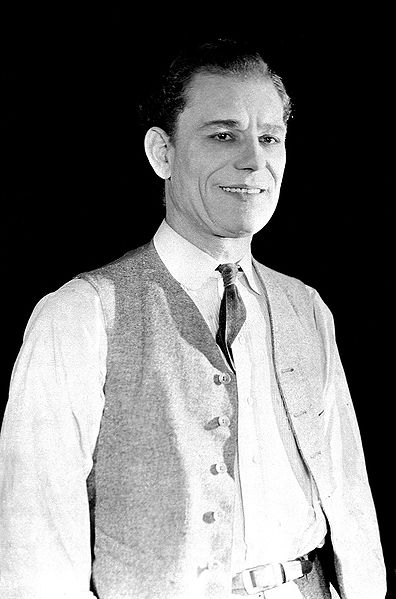
Despite my lack of formal education in Film, I have had a passionate interest in silent film legend Lon Chaney (1883-1930) since... I can't remember when, actually, but it's been pervasive. I've read at least a half dozen biographies on him and amassed a small collection of his films. (Like most silents, 75% of his are "lost films" meaning no prints exist. This tragedy is best understood by imaging what the world would be like if we had records of only 25% of Shakespeare's plays and poems. Think of that same loss, but in the film world rather than the literary one.)

Anyway, I had basically told everyone and their other brother Darryl that I was enrolled for this film class. I was not just excited about it. I was STOKED. I was PSYCHED. I was really, really looking forward to it!

So imagine my disappointment when I was informed late last week that MY silent film class had been... *dun dun Duunnnnnnnn* ...CANCELLED.

What? How could they do this? More importantly, how could they do this to me? It was wrong! It was an outrage! How dare they dangle this delicious slab of film delicacy before me, only to yank it away at the last moment before I'd had a single bite. Gone were my dreams of mingling with other Chaney fans and exchanging thoughts on the great "sound divide" crossover and the merits of silents vs. talkies. Gone were the Tuesday evenings spent exploring the cinematic heights of the 1920s and then bemoaning the current state of modern cinema. All this had almost been mine. It had been so close, and now, it was simply "cancelled"? But why? Why would they do such a thing?

Answer: low enrollment. Seriously.

I know, I know... it's hard to believe, but it's the truth. Yes, in the year 2011, in the midst of pocket-sized computers (what the kids are calling "smartphones") and the box office gold that is every-movie-ever-made-now!-in!-3D!, nobody cares about silent films anymore... Nobody, that is, except me.

But, all is not lost. To cheer me up on what would have been the first night of my much-anticipated film class, my professor (aka husband) welcomed me to the lecture hall (aka dining room) and presented me with two multiple choice tests: 1) a general knowledge quiz on silent film stars and directors, and 2) a quiz specifically on the life and films of Lon Chaney and his fellow-actor son, Lon Chaney Jr. (most famous for his 1941 horror classic, The Wolf Man).
I felt a lot better after kicking the prof's butt on the Chaney quiz (which I aced, naturally). 

More cheering up will occur this weekend as I soak up this gorgeous weather. We had a high today of 85 (really! in Chicago! in October!), and tomorrow will bring more of the same. Perfect weather for our planned outing to the apple orchard. MMmmmm, appley goodness awaits....

In conclusion: Bring on the Autumn! Booyah!

P.S. Lon Chaney is my hero. Fin.


http://www.goldensilents.com/stars/lonchaney.html

Wednesday, September 28, 2011

4 Brief Book Reviews

So it's been a whole month (um . . . how?) since my last post. To break that dry spell during which I was camping, cooking, traveling, and otherwise gallavanting/enjoying the final throes of summer sunshine, here's my latest offering for your reading pleasure, reflecting several of my own recent reads:


#1. The Hunger Games series by Suzanne Collins
I read this series mostly so I could discuss it with my friends, in anticipation of the upcoming movie trilogy based on the books. It's young adult fiction, and therefore very fast, easy reading. I would even call it a guilty pleasure, except that it was over so fast (about 24 hours per book for me, on average), that it was almost like one of those mini-cones you used to be able to get at the McDonald's drive-through. It's delicious, but there's about 4 ounces of ice cream there total, so you'd better make it last. Which of course you can't, because it will melt.

If you haven't heard of this series, I won't spoil any of the quite inventive plotline by describing it here. Suffice it to say that the characters are memorable (and should lend themselves nicely to the silverscreen), the morals are generally sound, and (like that other blockbuster YA book/movie series, Twilight) each book gets progressively weirder and the outlandish leaps of logic become harder to accept. Still, it's a fun little escape, and I'm excited to see how they pull off the translation of these books to film.

Overall rating: B- (with extra points for naming a male character "Gale," prompting me to explain to my husband that "it's Gale, not Gail," to which he responded, "Oh, like Gale Sayers? Cool.")

#2. Seductive Cinema: The Art of Silent Film by James Card
I read this book in preparation for a silent film class I'm taking next month at my local community college. It's a leisure course, so no college credit (bummer, right?), but I'm extremely excited to meet and converse with other people who will (presumably) appreciate my fascination/borderline obsession with silent film legend Lon Chaney. But I digress . . .

This book, by James Card, could not have been written by anyone else. As he says in the introduction, there's no need for footnotes or sources because "this writer was there," and between the cameo shots of him mingling with old silent film celebs and insider accounts of meetings with bigwig Hollywood producers of the era, there's no way you can doubt his story's authenticity.

But this isn't a story. This is nonfiction at its best. Even if you have never seen (or had any interest in seeing) a silent film, you'd probably enjoy portions of this book for the candid writing style alone. And if you're anything of a film buff (like me), you'll definitely enjoy Card's detailed and hilariously opinionated take on everything from the famed directors of the teens, '20s, and '30s to his valiant quest to preserve old cannisters of disintegrating silver-nitrate silent film reels when some studios were actually melting them down for the silver! (This was during the Depression, so that does something to mitigate, though not excuse, their crimes against these invaluable and irreplaceable film archives. Apparently money talks, even when it's in the form of melted silent films.)

Probably the most memorable takeaway: a silent film actress confided to James Card that she felt we "went the wrong direction" in marrying film to voice instead of music. That just struck me as poignant. Sure, films have had soundtracks for decades now, but the whole experience is so different than it was in the silent era. Back then, the limited dialogue was flashed on-screen for a few seconds, in between long visual scenes accompanied only by music conveying the appropriate emotions. Result: You were forced to actively participate in the entire experience. You couldn't multitask, half-watching the movie and half-doing something else. You had to immerse yourself in the cinema, let the film play out before your eyes (and your ears), surrendering all outside thoughts to the flow of the story onscreen. (More on this in a later post, I think, because I'm getting wordy, and that means I likely have more to write than what should be stuck into a "brief" book review.)

All told, Seductive Cinema more than lives up to its title. And I definitely feel more prepared for my upcoming film class having read Card's intriguing account of the earliest days of cinema and the flickering magic of the silent era.

Overall rating: A (It only missed the A+ due to some detail-heavy descriptions and other excess fat that could have been trimmed to make the book flow a bit better.)

#3. Growing Up Amish by Ira Wagler
*Disclaimer* This is a Tyndale book, but I did not work on it at any point during its development and so read it as a "fresh" audience (and presumably with no preexisting prejudice toward its praise or criticism). I had heard a lot about it, but mostly because of its hitting the coveted New York Times bestseller list. With that going for it, I figured it had to be worth reading.

Bottom line: Not my favorite, and frankly I wouldn't read it again. Caveat: Couldn't put it down the first (and only) time through. This owes mostly to the author being a great writer/storyteller, rather than to the merits of his actual (true life) story.

As far as autobiographies and more specifically bildungsroman (there's your free $50 word for the day) tales go, this one was extremely readable and mostly kept me interested. But after reading it, I felt like I hadn't really gained anything. At least, no lastly insights into Amish culture or even any strong spiritual nuggets. It was almost like chewing a whole pack of gum on a road trip; you enjoy each piece and it gives you a pleasant momentary distraction, but the flavor just doesn't last. And when the pack's gone, you're almost relieved that you can stop chewing. It's almost a relief to spit out that amorphous, nutrient-less wad of fading flavor.

As the author says in the epilogue (which strangely reminded me of preachers saying similar things from their pulpits), "If my readers glean only one thing from my story, I hope that's it. That God is there, even when he seems far away." True as that statement may be (and I believe it IS true), that wasn't what I gleaned from your story, Mr. Wagler. What I did learn were a few tidbits about Amish living that Witness left out, plus a general sense of gratitude that I wasn't born Amish, if the typical experience is anything like yours. . . . This is a strange admission for me, since many times in my life I have thought it would be great to flee the suburbs and "go Amish": live off the land; work the farm; eschew technology, globalism, and Facebook; carve out a simple, God-fearing lifestyle for myself and my family. Maybe it's the dresses that turned me off and gave me a reality check. (Jeans and T-shirts are my attire of choice, and I don't think I could stomach any life that required pioneer dresses 7 days a week. Whilst milking cows, raising chickens, and herding assorted farm animals, including perhaps a dozen of my own human offspring, no less.)

But back to the book . . . I don't want to judge Mr. Wagler for detailing his own experience of Amish existence, and I certainly don't want to detract from his great gift of writing, which this book leaves as an undeniable fact. If you choose to read Growing Up Amish, I hope you enjoy it. Just be prepared for a lot of grumbling, guilt-wallowing, and increasily tiresome introspection (this coming from a girl who self-identifies with that term). Some folks seem determined to be unhappy, no matter what God blesses them with. Eternally discontent, they skirt responsibilities and make "brave" (selfish?) choices to go off and find themselves rather than blooming where they're planted. An adventure? Perhaps. But mostly just a "Should I stay or should I go?" emotional roller coaster. If that sort of thing turns you on, you'll love this book. If not, save yourself a few hours and get your Amish fix the old-fashioned way: re-watching Witness.

Overall rating: C+

#4: The Touch by Randall Wallace
*Disclaimer (yes, again)* This is another Tyndale book, but not one I worked on. Truth be told, I mostly wanted to read it because it was by the guy who wrote Braveheart and, well . . . that movie is awesome.

The Touch is one of those simple stories (technically it's a novella, not a novel) that really sticks with you. It almost reads like a parable, which is probably intentional given the author's Q&A that reveals Randall Wallace's frequent readings of the Gospels. The characters are by no means caracatures, but they do fit into types, archetypes almost, that lend them a certain universal appeal.

Basic premise: There's a young doctor who has been blessed with "the touch": extraordinary talent in surgical technique. But after failing to save someone close to him, the doc hangs up his latex gloves, unable to perform surgery on anyone without picturing the victim who died in his arms. I won't go into details, but the rest of the book deals with the fallout of that tragedy and the doctor's struggle to embrace his talents and move beyond his grief.

While this definitely isn't a modernday sequel to Braveheart, there are certain similarities and a great deal of the same type of heroic, selfless sacrifice that made that movie such a powerful one. It's too gritty to be Nicholas Sparks, but you can almost feel echoes of that kind of tragic fate in this novella. Beyond that, I read the final page feeling a quiet contentment with the (not perfect but quite satisfying) final resolution of the characters' struggles. Without spoiling the ending, let me say that this book offers a tangible and satisfying conclusion, one full of real (read: not sentimental) hope and even a few warm fuzzies.

Overall rating: A-
Monday, March 7, 2011

Doctor Who and My Hatred of Change

Luke 5:36-39
No one tears a piece out of a new garment to patch an old one. Otherwise, they will have torn the new garment, and the patch from the new will not match the old. And no one pours new wine into old wineskins. Otherwise, the new wine will burst the skins; the wine will run out and the wineskins will be ruined. No, new wine must be poured into new wineskins. And no one after drinking old wine wants the new, for they say, "The old is better."


 (Christopher Eccleston: the only guy I can accept as Doctor Who, not because he was the best but simply because he was the first one I "met")

I recently experienced a traumatic event. I know what you're thinking. "What's one more? Haven't you toughened up enough by now to take it without whining and moaning?" One: no, I'm not that tough (yet). Two: I was being facetious about the trauma (kinda).

Let me set the scene for you. It's a quiet Saturday evening several weeks ago at my uncle's house. The fam got together (as we are wont to do) for dinner and quality time. After both sets of grandparents left, we broke out the Netflix so my cousin could continue showing me the awesome British scifi series "Doctor Who."

Everything was going great... until the season finale. So as not to ruin the surprise, nobody had warned me that the show's star, Doctor Who himself, one Christopher Eccleston, would soon be replaced. He literally changed from one person to another! Just like that! Sure, they wrote the story in such a way that kinda (in vague, scifi terms) explained the transition. So he's supposedly the same character "on the inside," even though he looks (read: IS) a completely different person, now played by David Tennant.

I later learned that Eccleston was actually the ninth actor to play Doctor Who. So he was no more or less original than Tennant. But that didn't make it any easier to see him leave. He was still the first one I ever knew... and the only one my mind would accept as the Doctor Who.

For you David Tennant fans out there (you know who you are), I have nothing against him as an actor or even as a Doctor Who. The problem is that I apparently bond too quickly/deeply to fictitious characters. This becomes problematic when said characters cease to be played by the same people, causing me to erupt in a fury of overly emotional grief and anger and disillusionment. Fun times...

This is the same reason I can't watch remakes of old movies. When Steve Carell (who is indisputably brilliant in "The Office") starred as Maxwell Smart in the movie version of the 1960s TV show, I was heartbroken. I refused to watch it. "You couldn't pay me enough to go see it," I said—and I meant it. Maxwell Smart is Don Adams and only Don Adams. As far as I'm concerned, anyone else is an imposter. This same thing has also happened with remakes of the A-Team, Charlie and the Chocolate Factory (which I saw but hated), and assorted other shows and movies.

Why does this happen? Why do I get so attached to one actor that it becomes impossible to imagine the role played by anyone else, even or especially if that new person is equally talented—or even better at the role? Amateur psychoanalysis aside, perhaps I'm too loyal. I've always (since I was a kid) said I hated change. Overall, that's still true. The original—the old—is always better to me than the new.

But c'mon, this is just a stupid TV show, right? Is it really worth getting upset over? "Yes," says my heart. "Yes, it is."

It's kind of embarrassing to admit, but I was actually close to tears when I had to say good-bye to my beloved "original" (at least to me) Doctor Who. If this were an isolated incident, that would be one thing. But it happens more than I care to admit.

So here's my question: Am I the only one who finds it really upsetting when I have to watch a character being played by someone new? Am I a ridiculous purist? Does anyone else have the same horrific aversion to change in fictional characters?

Friday, February 25, 2011

Why Christian Bale Should Win the Oscar

Luke 19:8-10
But Zacchaeus stood up and said to the Lord, “Look, Lord! Here and now I give half of my possessions to the poor, and if I have cheated anybody out of anything, I will pay back four times the amount.” Jesus said to him, “Today salvation has come to this house, because this man, too, is a son of Abraham. For the Son of Man came to seek and to save the lost.”

(Christian Bale as Dicky Eklund in The Fighter)

(Disclaimer: If you don't care about movies or celebrities or the Academy Awards, you'll probably want to skip this post. Apologies for my shallow, superficial interest in pop culture.)

(Secondary disclaimer: This post does not constitute an endorsement by the author for the film in general, particularly for conservative audiences. Although it is an amazing movie, the language is pretty rough, plus the drug use, the violence... Let's just say it definitely earned its R rating. Consider yourself warned.)

Last night I dragged my husband (drug? drugged? nah, that sounds like a precursor to foul play)... Anyway, last night my husband and I went to the movies to see The Fighter, starring Mark Wahlberg and Christian Bale. It was his first time seeing it and my second time, and let me just say that a second viewing only cemented my feeling that Bale deserves some major recognition for this role.

Now, you may have heard that this boxing flick is up for several Oscar nominations, including best supporting actor for the phenomenally talented Bale. So, without further ado, here are 3 solid reasons why Christian Bale should win the Oscar:
  1. He's just that good—You know how when you were a kid and you watched movies with impossibly unrealistic stunts (i.e. Indiana Jones jumping from a plane with an inflatable raft and riding it down a snow-covered mountain... or pretty much any other Indy stunt) and you were so blissfully naive you just accepted it? Without even having to try and convince yourself? Without even employing that mental technique known (to lit nerds) as the "willing suspension of disbelief"? Ok, when you're watching Christian Bale in The Fighter, it's exactly like that. Just like when you're a kid and you don't have the commonsense to doubt that what you're seeing is real, Bale makes you forget it's only a movie. You're totally swept up in story... the character... the sheer power of the performance. Very few actors can transcend our desensitized minds and our jaded perspective on the stories we see play out on-screen. Bale is the exception. He breaks through and to such an extent that I found myself having difficulty even picturing him in his other roles. He is a force of nature in this film. He inhabits his character completely. Yes, he is that good.
  2. Physical transformation—For his role as Dicky Eklund, Bale dropped a significant amount of weight, roughly 30 pounds. The best part is that when asked how much he lost for the role, he replied that he didn't know, that he was "just going for a certain look." Now, you can't give a guy an Oscar solely for his physical transformation. (Case in point: Bale's 125-pound performance in The Machinist—not that I'm recommending it; very dark and disturbing. But just Google his name and that movie, and check out how much he looks like a concentration camp survivor. Scary.) So, losing or gaining weight alone does not merit an Oscar. But there has got to be some recognition of the ability to so immerse yourself as an actor in your character that you substantially alter your physicality for the role.
  3. Redemptive role—We need more movies that provide stories depicting true redemption, which I will define as someone in dire straits doing an about-face, turning his back on his problems and righting the wrongs in his life. You might think of it as the Zacchaeus Effect: a selfish, corrupt tax collector who undergoes a salvation experience—and proceeds to donate half his money to the poor and pay back quadruple whatever he'd extorted over the years. Similarly, Dicky Eklund's character in The Fighter leaves behind his crack-smoking, crime-addled days in favor of helping his kid brother make a final push to become a boxing champ, essentially helping his brother eclipse Dicky's own boxing legacy. While Dicky doesn't profess an overt statement of faith after his change of heart, there are several poignant moments showing him kneeling, with his head bowed, his eyes closed—a classic, childlike posture of prayer. And the change in his behavior is evidence enough that something (or Someone) saved him, redeemed him, from his addiction. Is he perfectly reformed? No. But he does make the changes that matter most, all in the spirit of (as he puts it) "trying to do something better" with his life. It's a practical, realistic show of redemption. And like I said, Hollywood needs more movies that portray that kind of change.
If these reasons aren't enough, I could mention how Christian Bale is such a versatile actor and how he doesn't take himself too seriously as an "artist" and... Ok, that's enough.

But, if justice does not prevail and if Bale does not win an Oscar this coming Sunday, I—to quote one of my favorite movies—shall be very put out.